
How Does Eveningness Become a Sleep Problem? Evidence from College Students
A study of 2,822 college students linked chronotype and sleep quality through bedtime procrastination and sleep-hygiene awareness.

Chronotype reflects when people prefer to be active and asleep. In fixed academic schedules, evening types may experience a mismatch between biological timing and social demands. This study examined how that mismatch may translate into poorer sleep.
Bedtime procrastination as a behavioral link
The sample included 2,822 Chinese college students. Evening-type students reported more bedtime procrastination and poorer sleep quality than morning and intermediate types. Mediation analysis indicated that repeatedly delaying an intended bedtime partly connected eveningness with poor sleep.
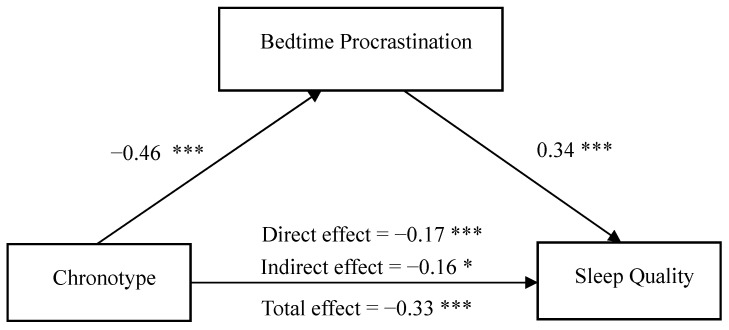
Sleep-hygiene awareness moderated selected associations, but knowledge alone did not guarantee timely sleep. Students may understand the value of regular sleep while still facing biological timing, digital distractions, and difficulties translating intentions into behavior.
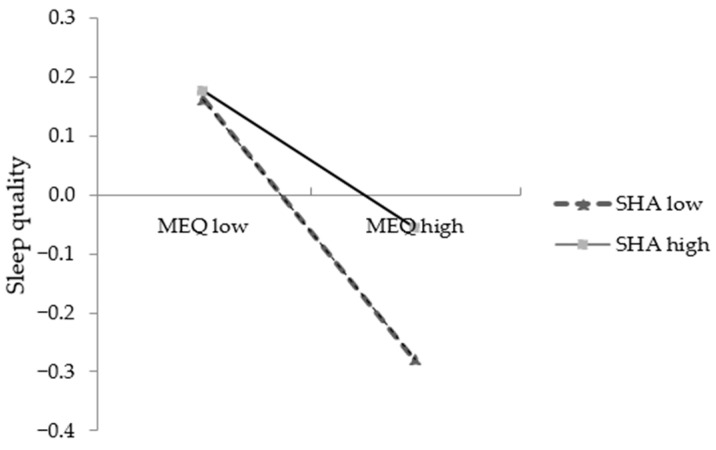
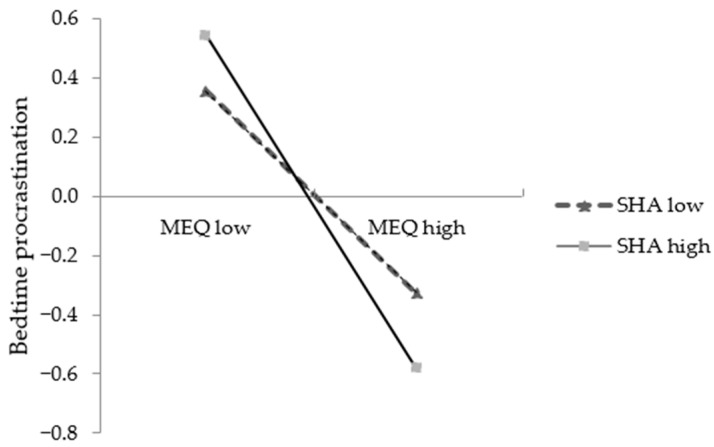
Figures 2–3 from the paper: associations at different levels of sleep-hygiene awareness. MEQ=chronotype, SHA=sleep-hygiene awareness.
The paper was published online in December 2022 and appears in the journal’s 2023 volume 20, issue 1.