From Personality to Negative Emotion—The Roles of Coping and Boredom
The study integrated personality, coping, and state boredom into a sequential pathway explaining depression, anxiety, and stress during lockdown.

Personality does not determine emotional outcomes directly. How people cope with stress and experience prolonged restriction may provide important intermediate links. This study surveyed 464 participants during the strict early phase of the COVID-19 lockdown in China.
A sequential psychological pathway
Dark Triad traits were positively associated with depression, anxiety, and stress. Structural equation models further indicated sequential mediation: relevant personality tendencies were associated with more negative coping, negative coping with greater state boredom, and boredom with more severe negative emotion.
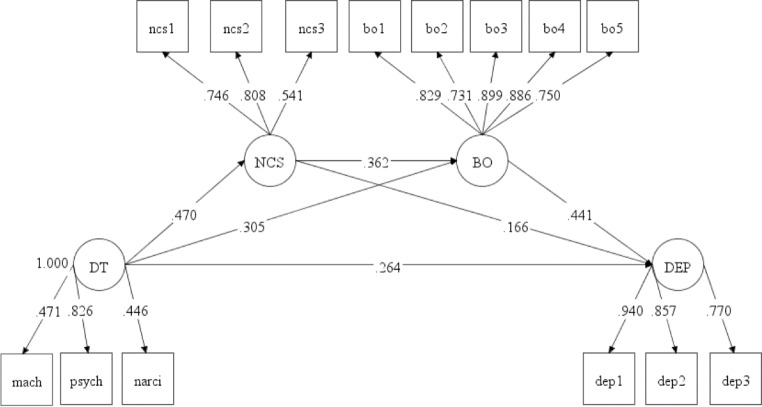
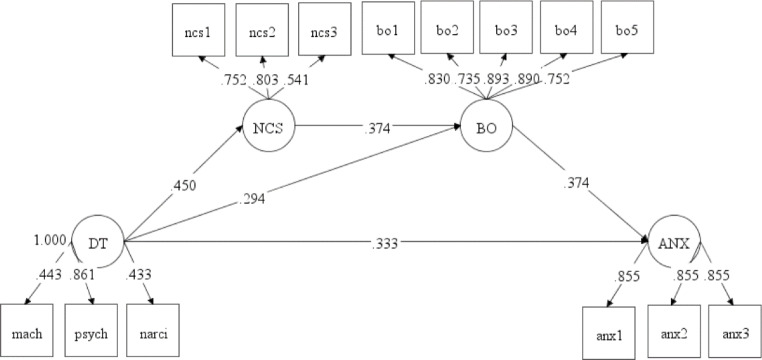
Figures 2–3 from the paper: depression model (left) and anxiety model (right). DT=Dark Triad, NCS=negative coping style, BO=state boredom, DEP=depression, ANX=anxiety. Source: Yang et al., Current Psychology.
The value of the model is not to attribute distress to personality, but to identify potentially modifiable processes between personality and emotion. More active coping, restored daily structure, and meaningful activities may help reduce boredom and associated distress. The cross-sectional, self-report design does not establish temporal or causal order.
The paper was first published online on 1 September 2022 and subsequently appeared in Current Psychology, volume 43, issue 15 (2024).