How Do Naps Change Memory? National Student Project Rated Excellent
Over one year, five students used behavioral testing and 64-channel EEG to investigate how a daytime nap changes declarative memory.

In June 2026, the National College Student Innovation Training Project “Effects of Napping on Declarative Memory Consolidation in College Students and Its Neural Mechanisms” passed Zhengzhou University’s final review with an Excellent rating. The project (No. 202510459037) was supervised by Minqi Yang and led by Linxi Yan.
Turning an everyday question into an experiment
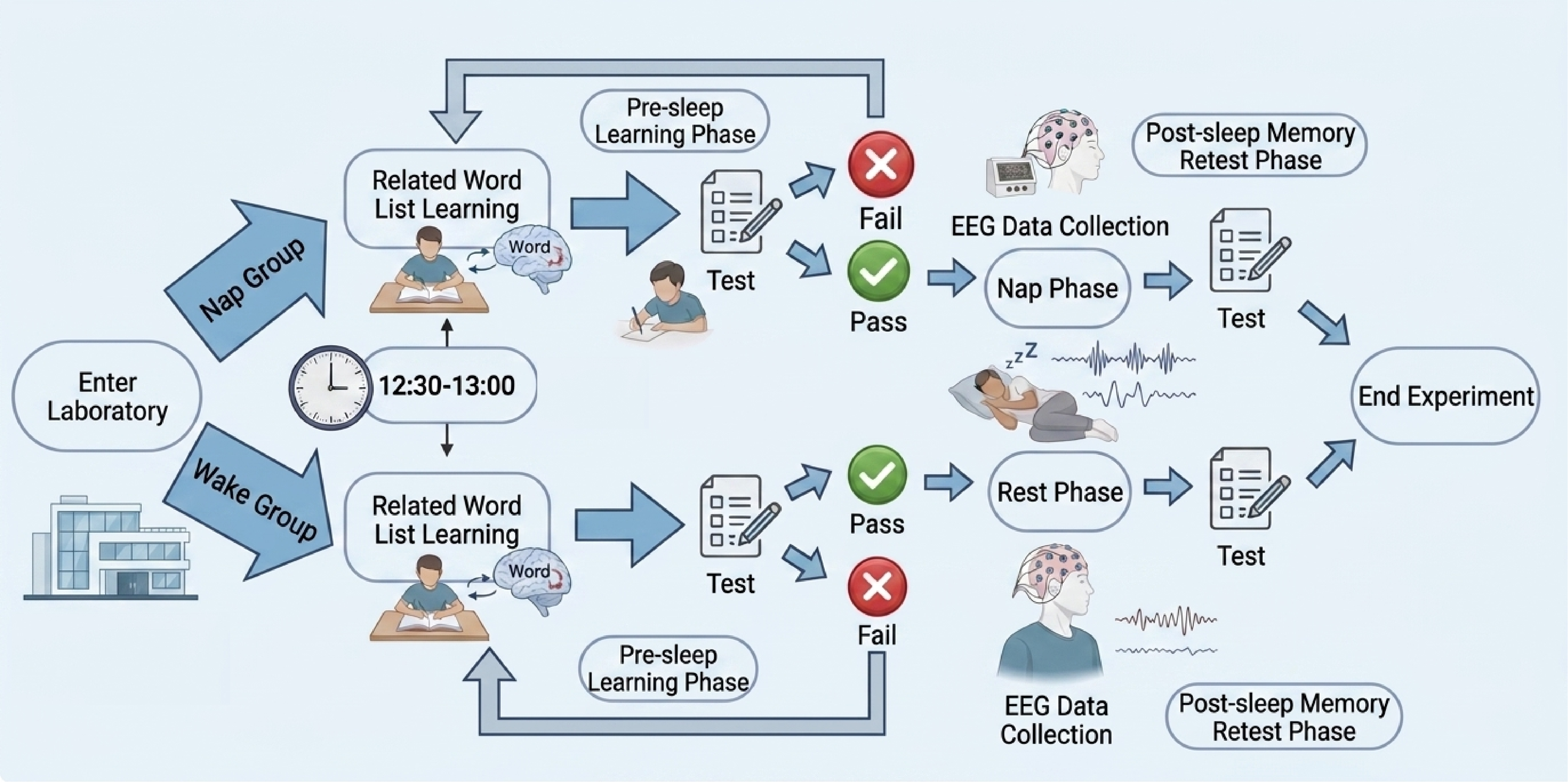
The team compared nap and quiet-wake conditions within the same participants, using semantically related word pairs to measure memory change. They recorded behavior and 64-channel EEG, scored sleep stages, and examined how slow waves and sleep spindles were related to memory performance.
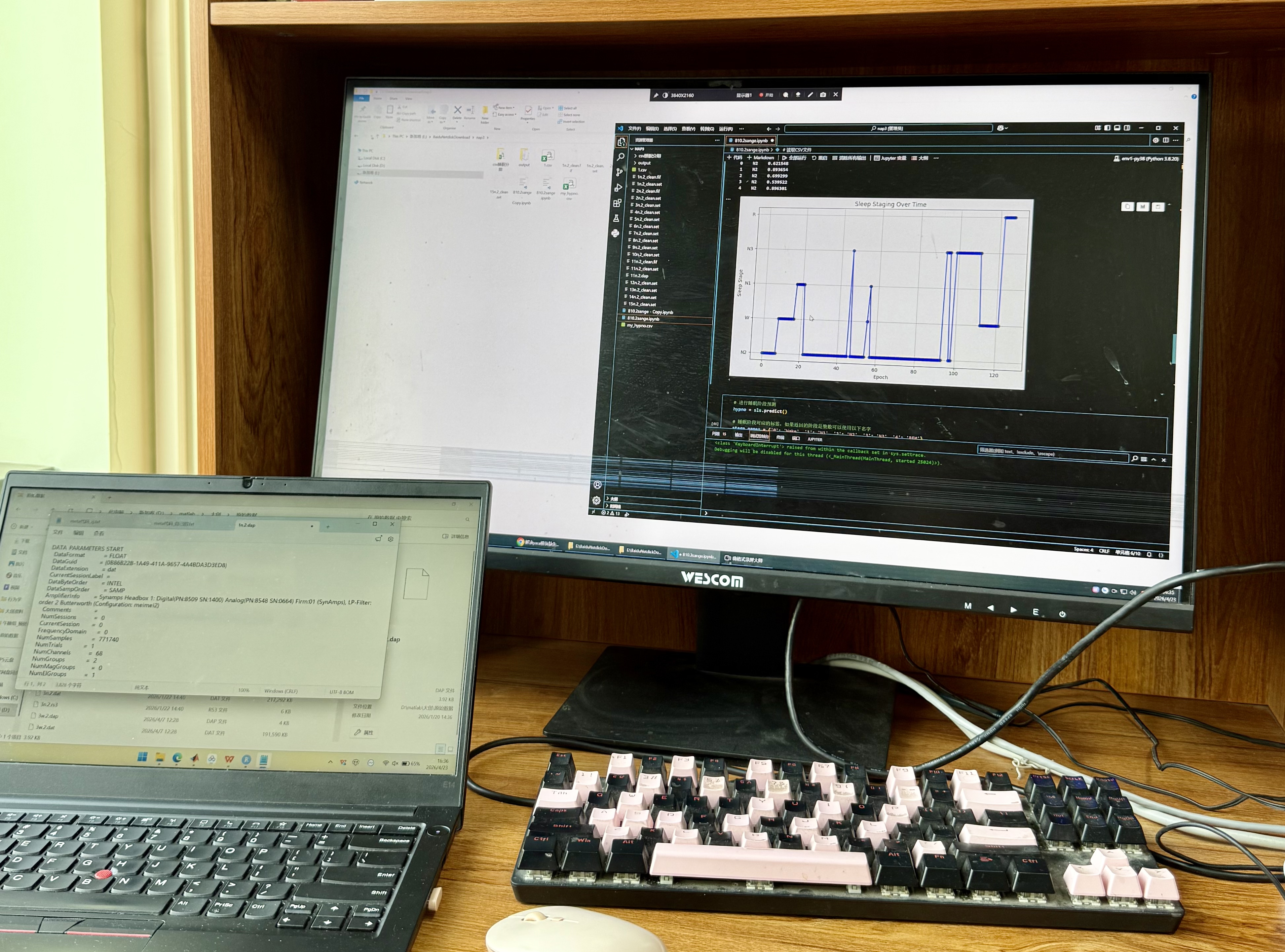
From June 2025 to May 2026, the work included literature review, task programming, pilot testing, ethics review, formal data collection, artifact removal, sleep staging, and statistical analysis.
Five students, one research chain
Linxi Yan coordinated the project and contributed to data collection, analysis, and writing. Weicong Wang, Yiling Liu, Lujia Liu, and Jiancheng Nie contributed across data collection, statistical analysis, software development, experimental records, and reporting. Their different disciplinary backgrounds supported the project from experimental implementation to practical translation.
The results suggested that napping benefited memory retrieval and processing efficiency. Greater low-frequency activity and higher slow-wave density were associated with stronger memory consolidation. The team also developed a mobile “Sleep Health Assistant” integrating sleep records, questionnaires, educational material, and feedback.


The mobile tool integrates questionnaires, sleep records, educational content, and trend feedback.